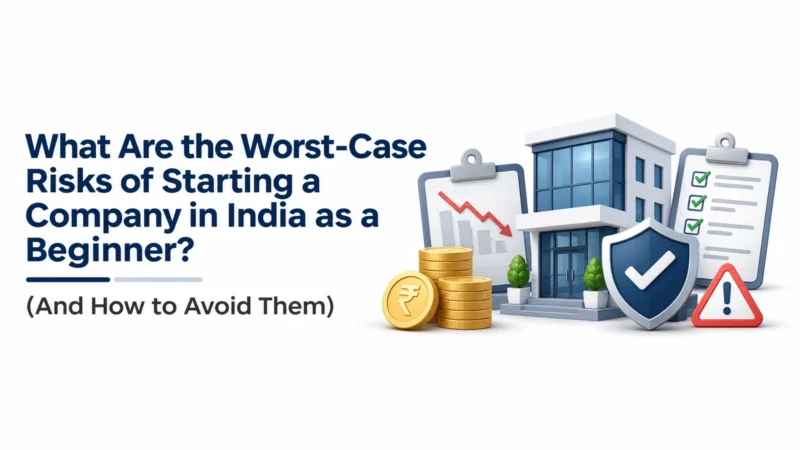
The biggest risks of starting a company in India include losing personal savings, accumulating business debt, facing legal penalties, choosing the wrong business structure and losing ownership control.
Imagine investing ₹10 lakh in your dream business, only to find that sales are low, expenses are rising and your savings are running out. Could you also lose your house, car or other personal assets if your company fails?
Understanding these risks, choosing the right business structure and planning your finances and legal responsibilities can help you protect your personal assets and avoid costly mistakes.

What Are the Biggest Risks of Starting a Company in India?
The biggest risks of starting a company in India include financial losses, personal liability, business debt, ownership disputes and legal non-compliance. While commercial risks cannot be completely eliminated, proper financial and legal planning can prevent many costly mistakes.
| Business Risk | Worst-Case Situation | How to Reduce the Risk |
|---|---|---|
| Financial loss | Losing your entire investment | Prepare a budget and emergency fund |
| Wrong business structure | Unnecessary expenses or personal liability | Choose the right legal entity |
| Business debt | Recovery action by lenders | Control borrowing and review guarantees |
| Ownership disputes | Losing control over business decisions | Define ownership and voting rights |
| ROC non-compliance | Penalties or director disqualification in qualifying cases | Maintain a compliance calendar |
| Tax non-compliance | Tax demands, interest and penalties | Maintain accounts and file returns |
| Incorrect registration documents | Penalties or legal proceedings | Verify documents before submission |
| Business closure | Outstanding debts and ongoing compliance costs | Follow the appropriate closure procedure |
| Intellectual property disputes | Losing the right to use your brand name | Conduct trademark checks |
Probay’s CA and CS team can help you identify financial and legal risks, choose a suitable business structure and plan your compliance responsibilities before investing your money.
Can I Lose All My Personal Savings If My Company Fails?
Yes, you can lose the entire amount you invest in your business if it fails. Company registration does not guarantee sales, regular income or profitability. Investing all your personal savings without proper financial planning can put both your business and family finances at risk.
Investing Your Entire Savings Without an Emergency Fund
Suppose you invest your entire ₹10 lakh savings in inventory, equipment, marketing and office expenses. If your business fails to generate sufficient revenue, you may have no money left for business operations or personal expenses.
Always separate your business investment from your personal emergency savings.
How Should You Divide Your Business Investment?
Here is an example of how you could allocate ₹10 lakh in personal savings before starting a business.
| Purpose | Example Allocation |
|---|---|
| Personal emergency savings | ₹3,00,000 |
| Product development or inventory | ₹2,50,000 |
| Marketing and customer acquisition | ₹1,00,000 |
| Equipment and business setup | ₹1,00,000 |
| Registration and compliance budget | ₹50,000 |
| Working capital reserve | ₹2,00,000 |
| Total savings | ₹10,00,000 |
This is an illustrative budget. Your actual allocation should depend on your business model, industry, family expenses and expected revenue.
Our Chartered Accountants at Probay can help you plan your business capital, estimate operating expenses and maintain sufficient financial reserves before investing your hard-earned savings.
Can I Lose My Personal Assets If My Company Fails in India?
Whether you can lose your house, car, personal savings or other assets depends on your business structure, borrowing arrangements and legal responsibilities.
How Limited Liability Protects Business Owners
A Private Limited Company, One Person Company or LLP generally separates business liabilities from the personal assets of its owners.
For example, if you invest ₹5 lakh as fully paid share capital in a Private Limited Company, you may lose your investment if the business fails. However, you are not normally personally responsible for its remaining debts simply because you are a shareholder.
Limited liability does not provide complete protection in every situation.
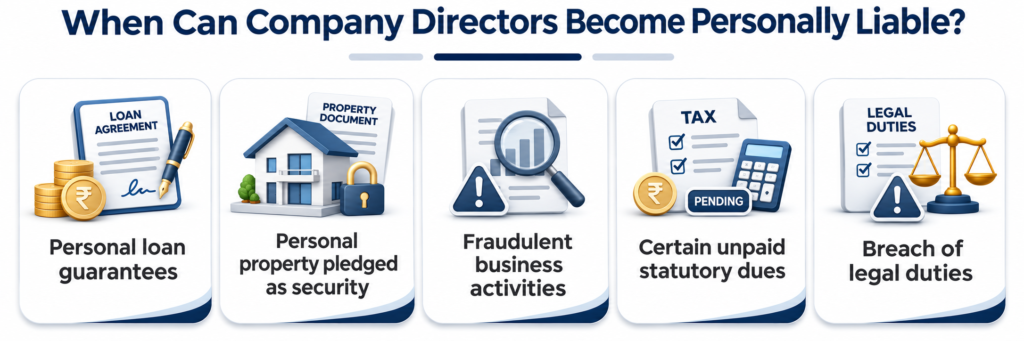
When Can Company Directors Become Personally Liable?
Personal liability of company directors in India may arise in the following situations:
- Personal loan guarantees: Lenders may recover outstanding company loans from directors who personally guaranteed them.
- Personal property pledged as security: Your house or other assets may be at risk if used as loan security.
- Fraudulent business activities: Fraud, dishonest transactions and false declarations may result in personal liability.
- Certain unpaid statutory dues: Directors may become personally responsible for specific unpaid taxes under applicable legal conditions.
- Breach of legal duties: Violating statutory responsibilities may lead to individual penalties or legal consequences.
Probay’s CA and CS team helps you understand financial risks, ownership rights and directors’ legal responsibilities before incorporation.
If protecting your personal assets is a priority, explore the limited liability benefits of Private Limited Company registration before starting your business.
Choosing the Wrong Business Structure Can Become an Expensive Mistake
One of the most common company registration risks is choosing a business structure simply because someone recommended it or because it is popular among other entrepreneurs.
A small online business, a manufacturing company and a technology startup may have completely different financial and legal requirements. Registering all three businesses under the same structure may not be appropriate.
Comparing Business Structures and Their Risks
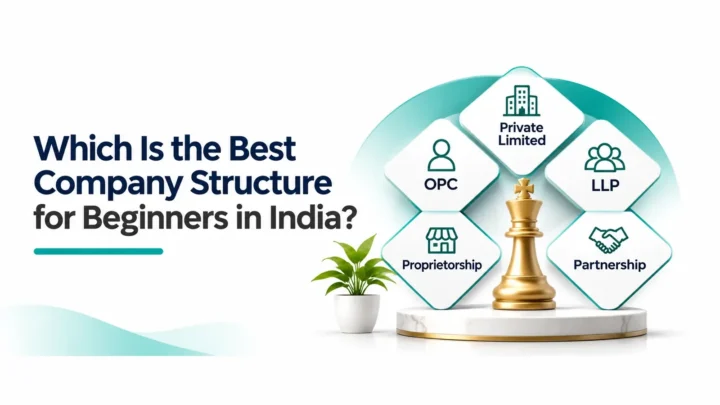
| Business Structure | Personal Liability | Minimum Owners or Partners | Compliance Level |
|---|---|---|---|
| Sole Proprietorship | Generally unlimited | 1 | Relatively low |
| Partnership Firm | Generally unlimited | 2 | Low to moderate |
| LLP | Generally limited, subject to exceptions | 2 | Moderate |
| One Person Company | Generally limited, subject to exceptions | 1 member | Moderate |
| Private Limited Company | Generally limited, subject to exceptions | 2 shareholders | Relatively high |
What Are the Disadvantages of Starting a Private Limited Company?
A Private Limited Company offers several benefits, including a separate legal identity, limited shareholder liability and opportunities to raise equity investment. However, beginners should also understand its responsibilities.
These include mandatory statutory audits, annual ROC filings, maintenance of company records, restrictions on certain financial transactions and formal procedures for changes in ownership or management.
Even if your company does not earn money, several of these responsibilities continue.
If you want to start independently, you may consider One Person Company registration. If you are starting a business with another person and prefer a different management structure, LLP registration may be worth considering.
Read our detailed comparison of the best company structures for beginners in India to understand which option may suit your plans.
Protect Your Savings Before You Register Your Company
Do not commit your hard-earned money to a business structure without understanding its costs, liability and compliance responsibilities. Our experienced CA and CS team can assess your investment, ownership plans and business requirements before you register.
Get Professional Business Structure and Risk Assessment Assistance
Losing Ownership or Control of Your Own Company
Another serious risk of starting a company with another person is losing control over important business decisions. Many beginners add friends, relatives or business contacts as shareholders without understanding the rights attached to their shares.
Adding a Shareholder Just to Complete Company Registration
A Private Limited Company generally requires at least two shareholders and two directors. Some founders add another person simply to meet these requirements without clearly discussing ownership rights.
For example, if you give your friend 40% of your company’s ordinary voting shares, that friend becomes a genuine shareholder with important rights. You cannot automatically take those shares back whenever you want.
Ownership disputes may arise when shareholders disagree about profits, business expansion, salaries, investment or the sale of company shares.
Giving Away Too Much Equity at the Beginning
Some founders give away a large ownership percentage in exchange for a small financial contribution or informal promise of business assistance.
As your company grows, those shares may become much more valuable. Changing the ownership arrangement later may require agreements, payments and formal corporate procedures.
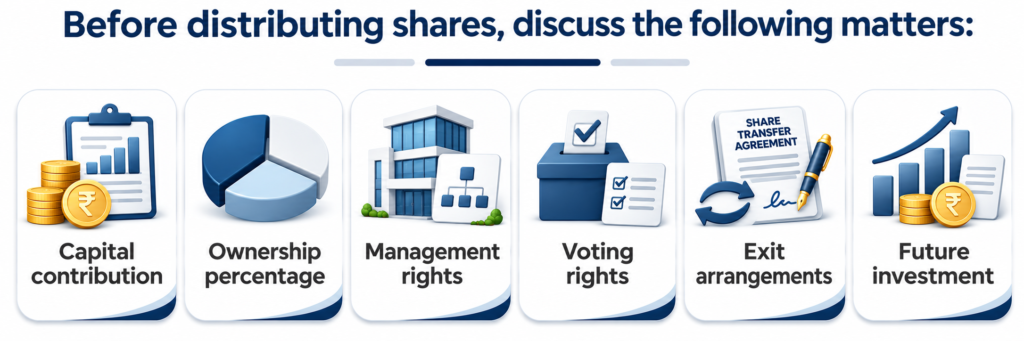
Before distributing shares, discuss the following matters:
- Capital contribution: How much money will each shareholder invest?
- Ownership percentage: How many shares will each founder receive?
- Management rights: Who will make daily business decisions?
- Voting rights: How will important company decisions be approved?
- Exit arrangements: What happens when a shareholder wants to leave?
- Future investment: How will additional shares affect existing ownership?
Our Company Secretaries can help you understand shareholding structures, corporate decision-making and applicable documentation before incorporation.
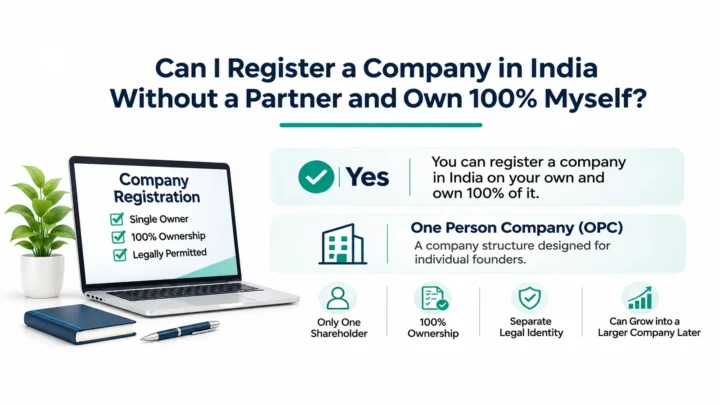
If you want complete ownership of your business, understand how to register a company in India without a partner before adding another shareholder unnecessarily.
What Are the Legal Risks of Starting a Business in India?
Company registration creates a legal entity, but it does not automatically provide permission to carry out every type of business activity.
Depending on your industry, location and operations, you may need additional registrations, licences or approvals before starting commercial activities.
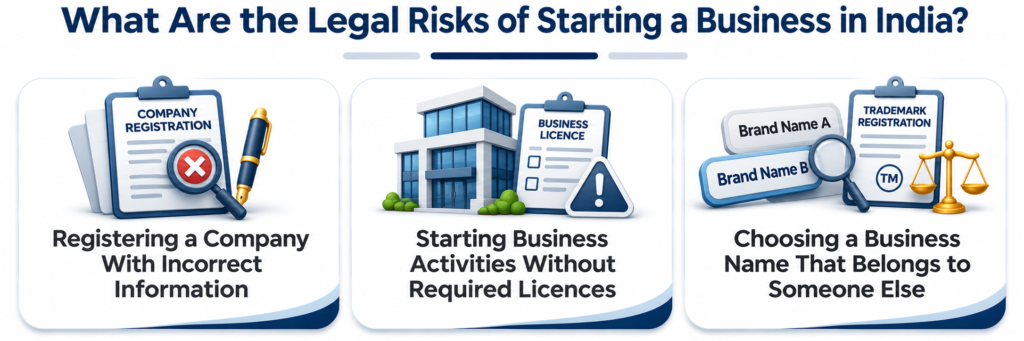
Registering a Company With Incorrect Information
Submitting incorrect registered office details, shareholder information, identity documents or misleading declarations can create serious registration problems.
An accidental mistake may lead to corrections or delays. Knowingly submitting false documents or hiding important information can result in much more serious legal consequences.
Always review the information being submitted in your name, even when a professional is preparing the application.
Starting Business Activities Without Required Licences
For example, a company selling food products may require food safety registration or licensing. A business involved in international trade may need an Importer Exporter Code, subject to applicable exceptions. Certain financial activities require separate regulatory approvals.
Operating without mandatory permissions may result in penalties, restrictions or suspension of business activities.
Choosing a Business Name That Belongs to Someone Else
Approval of your company name does not automatically provide trademark protection. Another business may already hold rights over a similar brand name.
If you spend several lakhs on packaging, advertising, website development and branding before checking trademark availability, a dispute could force you to change your brand and repeat those expenses.
Our CA and CS team can help identify applicable business registrations, review incorporation documents and guide you towards the appropriate professional assistance for specialised approvals.
What Happens If I Ignore Company Compliance After Registration?
Many beginners believe their legal work is finished once they receive a Certificate of Incorporation. In reality, company registration is the beginning of several ongoing responsibilities.
Company compliance requirements in India apply even when a registered company has limited operations or no revenue.
Missing Important First-Year Compliance Requirements
The initial months after registration are particularly important. Missing a mandatory filing can create avoidable expenses before your company has even started earning.
| Compliance Requirement | General Timeline or Applicability | Risk of Non-Compliance |
|---|---|---|
| First Board Meeting | Within 30 days for applicable companies | Statutory penalties |
| First Auditor Appointment | Normally within 30 days by the Board for a non-government company | Audit and compliance defaults |
| Registered Office Verification | Within 30 days, where not completed during incorporation | Penalties and verification issues |
| Share Certificate Issuance | Within 2 months of incorporation for subscribers | Statutory penalties |
| INC-20A Filing | Within 180 days for applicable companies having share capital | Penalties and restrictions on starting business |
| Statutory Audit | Every financial year for companies | Annual compliance defaults |
| ROC Annual Filings | Every financial year within applicable deadlines | Additional fees and possible penalties |
| Income Tax Return | Every applicable tax year | Tax-related consequences |
Different requirements and exemptions may apply to OPCs, small companies and other categories of businesses.
What Happens If You Forget to File INC-20A?
Applicable newly incorporated companies with share capital must complete the commencement of business declaration before commencing business or exercising borrowing powers, within the prescribed 180-day period.
Under Section 10A of the Companies Act, 2013, failure to comply may attract the following penalties:
| Responsible Party | Applicable Penalty |
|---|---|
| Company | ₹50,000 |
| Officer in default | ₹1,000 per day, up to ₹1,00,000 |
The Registrar of Companies may also initiate removal proceedings where the necessary statutory conditions are satisfied.
Can a Director Become Disqualified?
Under Section 164(2) of the Companies Act, 2013, failure to file financial statements or annual returns for three continuous financial years can result in director disqualification for five years, subject to applicable provisions.
This can affect your eligibility for appointments in other companies.
Our Company Secretaries can help maintain a statutory compliance calendar, while our Chartered Accountants can assist with financial statements, accounting and applicable tax responsibilities.
Explore our Company Annual Filing services and learn more about mandatory compliance after company registration in India to avoid unnecessary defaults.
Can I Get Into Legal Trouble Because of Business Tax Mistakes?
Incorrect tax filings, missed deadlines and improper financial records can lead to penalties, interest and legal complications. Here are three common tax mistakes beginners should avoid.
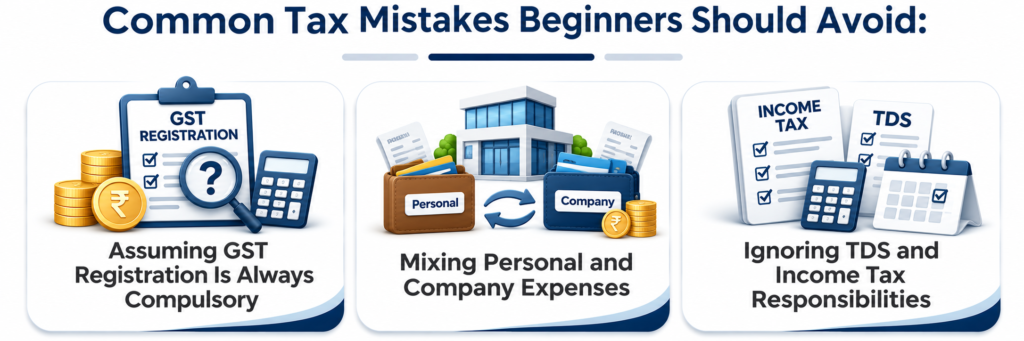
Assuming GST Registration Is Always Compulsory
Company registration does not automatically make GST registration mandatory. Its applicability depends on turnover, business activities and other legal conditions.
Once registered under GST, you must maintain applicable records and file returns, including nil returns where required.
Mixing Personal and Company Expenses
Your company’s bank account is separate from your personal finances. Using company funds for personal expenses or undocumented withdrawals can create accounting, taxation and legal problems.
Ignoring TDS and Income Tax Responsibilities
Your company may need to deduct TDS, maintain financial records, pay applicable taxes and file income tax returns. These responsibilities may continue even when your company earns no revenue or suffers losses.
Probay’s CA team helps you manage bookkeeping, GST applicability, TDS requirements and tax filings to reduce unnecessary penalties and financial risks.
Financial Risks of Starting a Business With Loans
Business loans can help fund equipment, employees and expansion. However, borrowing before establishing a reliable source of revenue can increase financial pressure.
Suppose you borrow ₹15 lakh expecting monthly sales of ₹5 lakh, but generate only ₹1 lakh. You must still pay loan instalments, rent, salaries and supplier expenses, which may lead to cash shortages.
How to Reduce Business Borrowing Risks
- Prepare realistic sales and revenue estimates.
- Calculate loan instalments alongside operating expenses.
- Understand personal guarantees before signing loan documents.
- Avoid pledging personal assets without assessing the risks.
- Maintain sufficient working capital and emergency funds.
- Review your financial position before taking additional loans.
Probay’s CA team can help you assess borrowing costs, plan cash flow and determine suitable funding requirements without putting unnecessary financial pressure on your business.
What Happens If a Company Fails in India?
Business failure is not a crime. A company may fail due to low demand, financial losses or unsuccessful business decisions. However, stopping business operations does not automatically close a registered company.
Your Financial and Legal Responsibilities May Continue
You may still need to complete pending statutory filings, settle employee payments, clear supplier liabilities, cancel applicable tax registrations and maintain financial records. Ignoring these responsibilities can lead to additional penalties and financial losses.
Can I Simply Close My Company If It Does Not Work?
Eligible companies can apply for Company Strike Off after settling their liabilities and meeting statutory requirements. Companies with unresolved debts may require liquidation or insolvency proceedings.
Company closure does not automatically cancel personal guarantees or other legally enforceable liabilities.
Probay’s CA and CS team can help identify pending compliance, review financial records and assess the appropriate legal closure procedure.
How to Reduce Business Risk in India Before Starting a Company
Proper planning can help protect your personal savings and reduce financial, legal and operational risks.
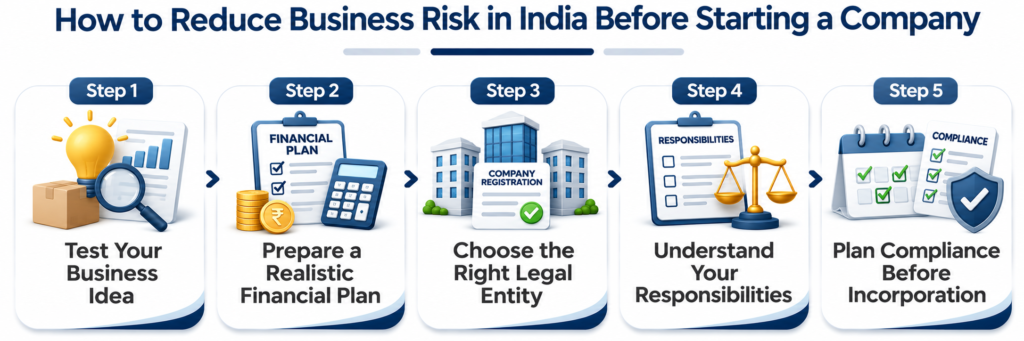
Step 1: Test Your Business Idea
Research customer demand, competition and expected costs before investing your savings.
Step 2: Prepare a Realistic Financial Plan
Calculate setup costs, monthly expenses and emergency funds. Keep personal and business budgets separate.
Step 3: Choose the Right Legal Entity
Select a business structure based on your investment, ownership preferences, business risks and growth plans.
Step 4: Understand Your Responsibilities
Understand shareholder rights, director duties and financial responsibilities before signing incorporation documents.
Step 5: Plan Compliance Before Incorporation
Consult our CA and CS team to understand applicable registrations, statutory filings and first-year compliance costs.
Learn more about how to start a company in India without getting trapped in legal paperwork.
How Our CA and CS Team Helps You Avoid Company Registration Risks
At Probay, our Chartered Accountants and Company Secretaries assess your business requirements before registration to help reduce financial, legal and compliance risks.
How Our Chartered Accountants Help Protect Your Financial Interests
Our CA team assists with:
- Business capital and investment planning.
- Working capital and operating expense estimates.
- Tax responsibilities and GST applicability.
- Accounting and financial record management.
- Financial reporting and tax filings.
- Financial implications of business borrowing.
How Our Company Secretaries Help Reduce Corporate Compliance Risks
Our CS team assists with:
- Selecting the right business structure.
- Understanding shareholder rights and director duties.
- Planning ownership and shareholding arrangements.
- Preparing and reviewing incorporation documents.
- Maintaining statutory records and compliance calendars.
- Completing applicable ROC filings.
Learn more about the role of a company registration consultant in India and whether you need a CA to register a company in India.
Whether you need company registration in Delhi, Noida or Ghaziabad, our CA and CS team helps you build a strong financial and legal foundation for your business.
Frequently Asked Questions
Is starting a company in India risky for beginners?
Yes. Beginners may face financial losses, ownership disputes and compliance penalties. Proper planning and professional guidance can help reduce these risks.
Can I lose my house if my Private Limited Company fails?
Generally, no. However, personal guarantees, secured loans, fraud and certain statutory liabilities may put your personal assets at risk.
What is the biggest financial risk of starting a business?
Investing too much money without testing customer demand is a major risk. Maintain sufficient working capital and emergency savings.
Can I go to jail if my company fails in India?
No. Ordinary business failure does not lead to imprisonment. However, fraud, deliberate tax evasion and serious legal offences may result in criminal proceedings.
Do I need to complete compliance if my company has no business?
Yes. Registered companies must fulfil applicable accounting, statutory audit, ROC filing and income tax requirements even with zero revenue.
Which business structure has the lowest risk in India?
An OPC, LLP and Private Limited Company generally offer limited liability protection, subject to legal exceptions. The right structure depends on your business requirements.
Can I lose ownership of my company?
Yes. Share transfers, new share allotments, poorly planned investment agreements and ownership disputes can reduce your ownership or control.
Can I close my company if it does not generate profits?
Yes. You must follow the applicable legal closure procedure based on your company’s financial condition and outstanding liabilities.
Is hiring a CA and CS necessary to avoid business risks?
Professional CA and CS assistance helps reduce financial, taxation and corporate compliance risks. Certain statutory certifications and audits also require qualified professionals.
Start Your Company Without Putting Your Hard-Earned Savings at Unnecessary Risk
Protect your personal savings from costly registration mistakes, ownership disputes and unnecessary compliance penalties.
Probay’s CA and CS team helps you choose the right business structure, plan your investment and understand your legal responsibilities before registration.
Make the right decisions before investing your hard-earned money.